- Distortion correction is the prerequisite for video stitching and AI analytics.
- Five types covered: fisheye, eagle-eye, BEV, bullet, medical.
- No calibration board required; real-time standard-stream output.
1. What Video Distortion Correction Is
Video distortion correction (also called lens undistortion) transforms distorted camera frames back into geometrically accurate images — straight lines become straight, proportions become true. It is the foundational step before stitching, AI analytics, or any downstream vision task, because a distorted frame corrupts every later measurement.
| Distortion Type | Lens | Typical Use |
|---|---|---|
| Fisheye | Ultra-wide, 180°+ | Surveillance, room coverage |
| Eagle-eye (panoramic) | Multi-sensor 180°/270°/360° | Wide-area monitoring |
| BEV (bird's-eye view) | Vehicle surround cameras | ADAS, parking assistance |
| Bullet (wide-angle) | Fixed security cameras | Security & forensics |
| Medical / endoscope | Specialist optics | Clinical imaging |
2. The Five Distortion Types, Explained
Fisheye correction
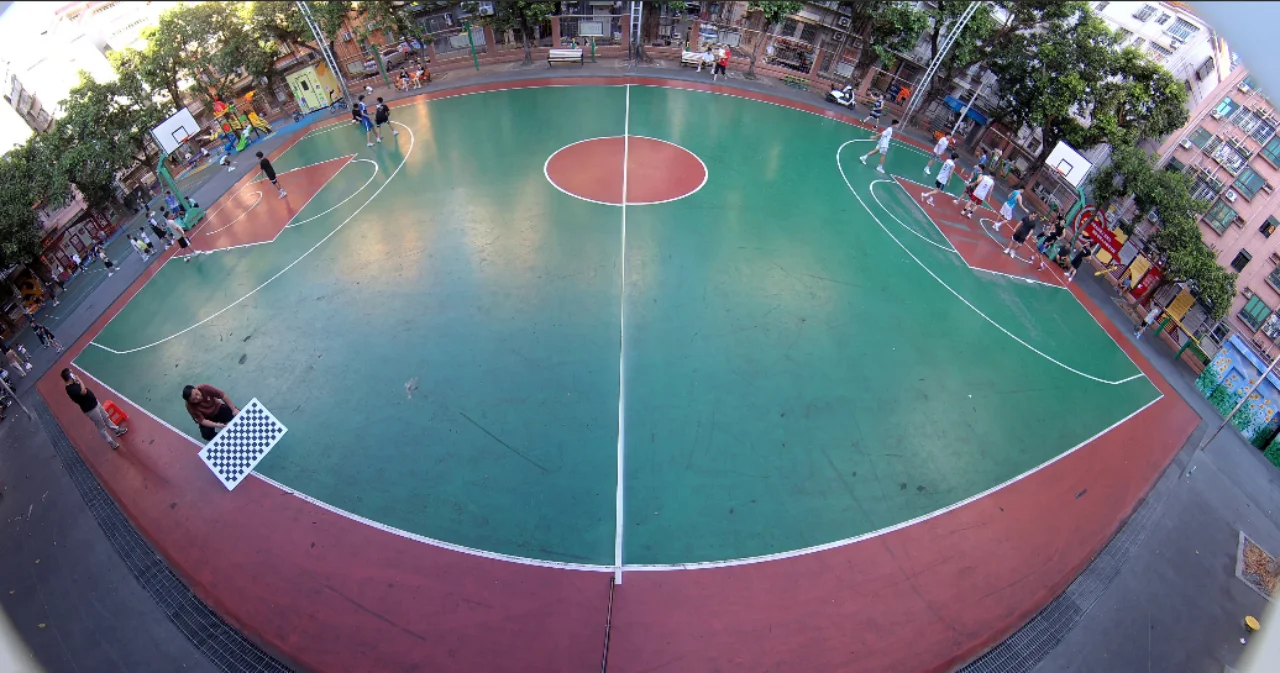
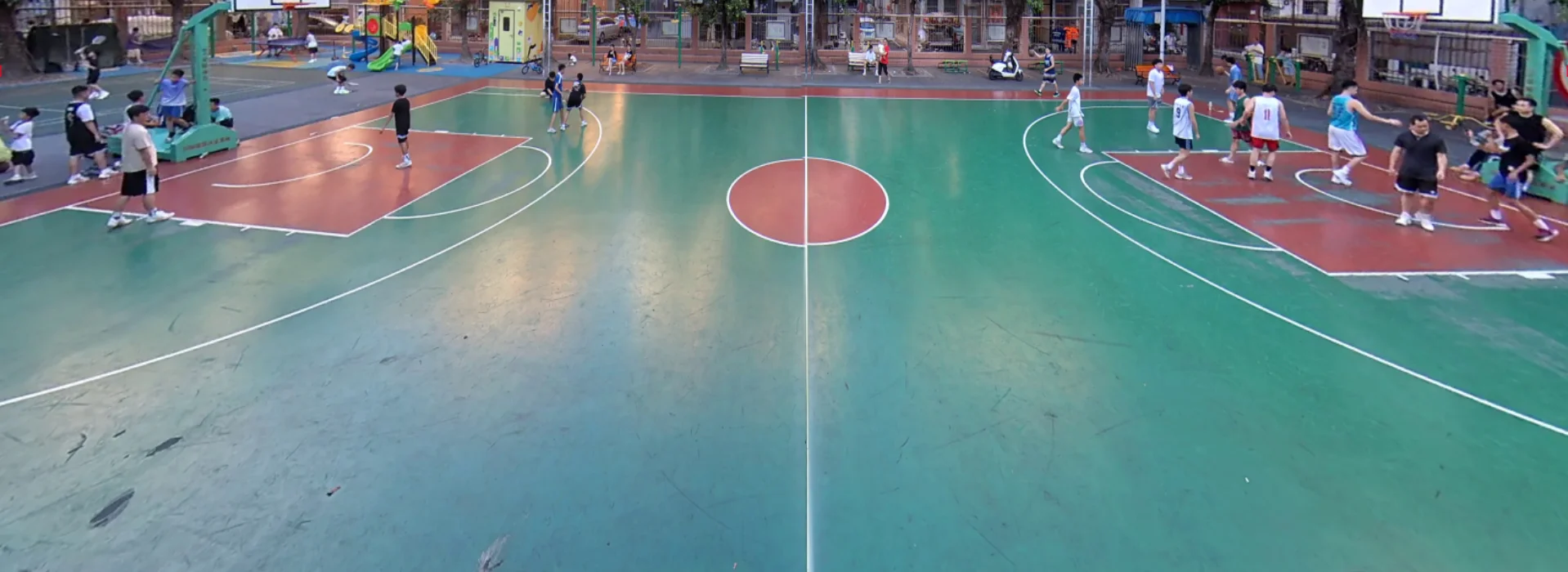
Fisheye lenses bend straight lines near the edges into curves. Correction restores natural perspective so edges look straight and scenes look right — critical for surveillance where objects near frame edges must be identifiable.
Eagle-eye (panoramic) correction
Eagle-eye cameras combine multiple sensors into one ultra-wide view with heavy distortion at the seams. Correction produces a clear, natural wide-angle image for large-area monitoring.
BEV correction
BEV converts an angled camera view into a clean top-down view, making ground-level detail instantly readable — the basis for parking assistance and driving-safety systems.
Bullet camera correction
Wide-angle bullet cameras distort building lines and body proportions. Correction restores accuracy for reliable, forensic-ready surveillance footage.
Medical imaging correction
Endoscopes and medical cameras need precise geometry for clinical use. Dedicated correction keeps measurements and anatomy true.
3. Why Correction Matters Before AI and Stitching
Every downstream task inherits the error from a distorted frame. Video stitching needs distortion removed before registration, otherwise seams misalign. AI detection and tracking need undistorted geometry, otherwise object size and position are wrong. Correction is not a cosmetic step — it is the quality gate for the whole pipeline.
4. Selection Criteria That Actually Matter
4.1 Automatic, calibration-board-free correction
Traditional calibration requires laying a physical calibration board on site — slow and impractical for deployed cameras. A modern tool should correct automatically from lens parameters, with no calibration board required and plug-and-play output.
4.2 Correction-type and brand coverage
Confirm the tool covers all five distortion types and a wide range of brands. The SuperMetaX OrthoVision covers 18+ correction types, 5 distortion categories, and 20+ camera brands — Hikvision, Dahua, Uniview, Axis, Bosch, Sony and more.
4.3 Real-time, stream-compatible output
Correction should complete in real time and output standard streams (RTSP / RTMP / FLV / HLS / WebSocket) so the result plugs directly into existing surveillance, analytics and ADAS platforms without rework.
5. Typical Scenarios
- Surveillance and security — fisheye and eagle-eye correction for wide-area monitoring and forensic-grade footage.
- ADAS and parking — BEV correction for parking assistance and driving safety.
- Industrial vision — undistorted geometry for measurement and inspection.
- Medical imaging — accurate geometry for endoscopes and clinical cameras.
6. Frequently Asked Questions
Does distortion correction need a calibration board?
No. Modern tools correct automatically from lens parameters — no on-site calibration board is required, and cameras are ready once connected.
Which camera brands are supported?
Hikvision, Dahua, Uniview, Axis, Bosch, Sony, Hanwha and more — 20+ brands via standard streams such as RTSP, ONVIF and GB28181.
Can it correct in real time?
Yes. Correction runs in real time and outputs standard video streams compatible with existing surveillance and analytics platforms.
What distortion types are covered?
Fisheye, panoramic (eagle-eye), BEV, bullet, and medical — five categories covering the major lens families in the field.
Can corrected video feed AI analytics?
Yes. Undistorted geometry improves AI detection and tracking; the output is standard streams compatible with existing analytics platforms.
Which scenarios benefit most?
Surveillance, ADAS and parking, industrial vision, and medical imaging — anywhere geometry must stay accurate.