1. What Is Video Stitching?
Video stitching is the process of combining video frames captured simultaneously by multiple cameras into a single continuous, seamless panoramic video in real time. Unlike photo panoramas, the core challenge of real-time video stitching is speed — every frame must be registered, transformed, blended, and output within milliseconds, with no perceptible latency.
Four Levels of Video Stitching
| Level | Name | Description | Typical Product |
|---|---|---|---|
| Level 1 | Static Stitching | Fixed cameras, fixed parameters, one-time registration | Most security stitching systems |
| Level 2 | Dynamic Stitching | Auto re-registration after minor camera adjustment | Industrial stitching platforms |
| Level 3 | Real-time Fusion | Stitched view overlaid onto GIS/3D map | Video Twin systems |
| Level 4 | Smart Analytics | AI object detection and tracking on stitched view | SuperMetaX and similar solutions |
2. How Video Stitching Works
A multi-camera video stitching pipeline consists of four core stages:
2.1 Capture & Pre-processing
After synchronous capture, each frame undergoes geometric correction (lens distortion removal) and color correction (white balance and exposure normalization). Mismatched distortion means misaligned seams; mismatched color means visible joints — both are dealbreakers for professional surveillance video stitching.
Pro tip: Using identical camera models and settings dramatically reduces pre-processing complexity.
2.2 Image Registration
Image registration is the technical heart of any video stitching system. The algorithm finds the overlapping region between adjacent cameras and computes the homography matrix that maps them into a shared coordinate space. The two main approaches:
| Method | How It Works | Pros | Cons |
|---|---|---|---|
| Feature-point (SIFT/SURF/ORB) | Detect corners and edges; match keypoints between adjacent frames | Fully automatic, strong adaptability | Struggles with repetitive textures (plain walls) |
| Deep learning | Neural network outputs registration parameters directly | Fast, robust to lighting changes | Requires large training datasets and powerful GPUs |
2.3 Projection & Transformation
Once registered, all camera feeds are warped into a unified coordinate system. Common projection models:
- Cylindrical projection — horizontal wrap-around (e.g., 360° warehouse monitoring)
- Spherical projection — full-sphere coverage (e.g., marine surround view)
- Planar projection — straight-line scenes with a small number of cameras (e.g., corridors)
2.4 Blending & Rendering
The final step determines whether the stitched image looks natural. Overlapping regions cannot simply be stacked — visible seams or brightness jumps will appear. Key blending techniques:
- Linear blending — distance-weighted pixel average; fast but may produce ghosting on moving objects
- Multi-band blending — blend at multiple frequency scales; high quality but computationally heavy
- Optimal seam algorithm — automatically finds the least-visible seam path through the overlap zone
SuperMetaX uses an adaptive multi-band blending algorithm that switches strategy per region — high-precision multi-band for static backgrounds, fast linear blending for moving targets to eliminate ghosting.
3. How to Choose a Video Stitching System: 5 Key Dimensions
When evaluating a video stitching system, assess these five dimensions:
3.1 Channel Count
How many cameras do you need to stitch simultaneously?
- 4–8 channels: Small sites (offices, small warehouses) — most solutions qualify
- 8–16 channels: Medium sites (mid-size warehouses, workshops) — focus on throughput
- 16–64 channels: Large sites (campuses, ports) — evaluate distributed architecture
- 64+ channels: Very large sites (city-scale hubs) — architectural scalability is critical
SuperMetaX supports 8–64 HD channels of real-time video stitching, expandable beyond 100 via distributed GPU clusters.
3.2 Latency
End-to-end delay from camera capture to panoramic output:
- < 50ms: Ultra-low latency — remote control, autonomous vehicles
- 50–200ms: Industrial standard — most live monitoring scenarios
- 200–500ms: Near real-time — non-critical patrol
- > 500ms: Offline stitching — post-event analysis only
SuperMetaX delivers < 100ms end-to-end latency in standard configurations.
3.3 Output Resolution
Output resolution scales with input count and per-channel resolution. 4 × 1080p → ~4K panorama; 16 × 1080p → 8K+. Confirm GPU hardware-accelerated rendering support.
3.4 Compatibility & Integration
Can it integrate seamlessly with existing surveillance video stitching infrastructure?
- ONVIF / RTSP protocol support?
- Compatible with Hikvision, Dahua, Uniview cameras?
- SDK/API available for third-party integration?
- GB/T 28181 national standard support?
3.5 Operations & Scalability
- Does re-registration happen automatically after camera adjustment?
- Can channels be added or removed online?
- Is a visual operations dashboard provided?
4. Solution Comparison: SuperMetaX vs Traditional NVR vs DIY
| Dimension | SuperMetaX Video Stitching | Traditional NVR Stitching | Open-source DIY |
|---|---|---|---|
| Channel count | 4–dozens, elastic scaling | Usually ≤ 4 | Limited by dev capability |
| Latency | ≤ 100ms, GPU-accelerated | 300ms–1s+ | Unstable, hardware-dependent |
| Seam quality | Sub-pixel alignment, no ghosting | Fixed params, poor adaptability | Depends on implementation quality |
| Moving objects | ✅ Automatic handling | ❌ Ghosting on motion | ⚠️ Must implement yourself |
| AR overlay | ✅ Rack labels, sensors, alerts | ❌ None | ⚠️ Must develop yourself |
| Integration effort | Low — standard stream output | Low but limited functionality | High — long development cycle |
| Best for | Industrial, security, events, marine | Small offices / retail | PoC / research |
5. Deployment Scenarios

Warehouse Panoramic Monitoring
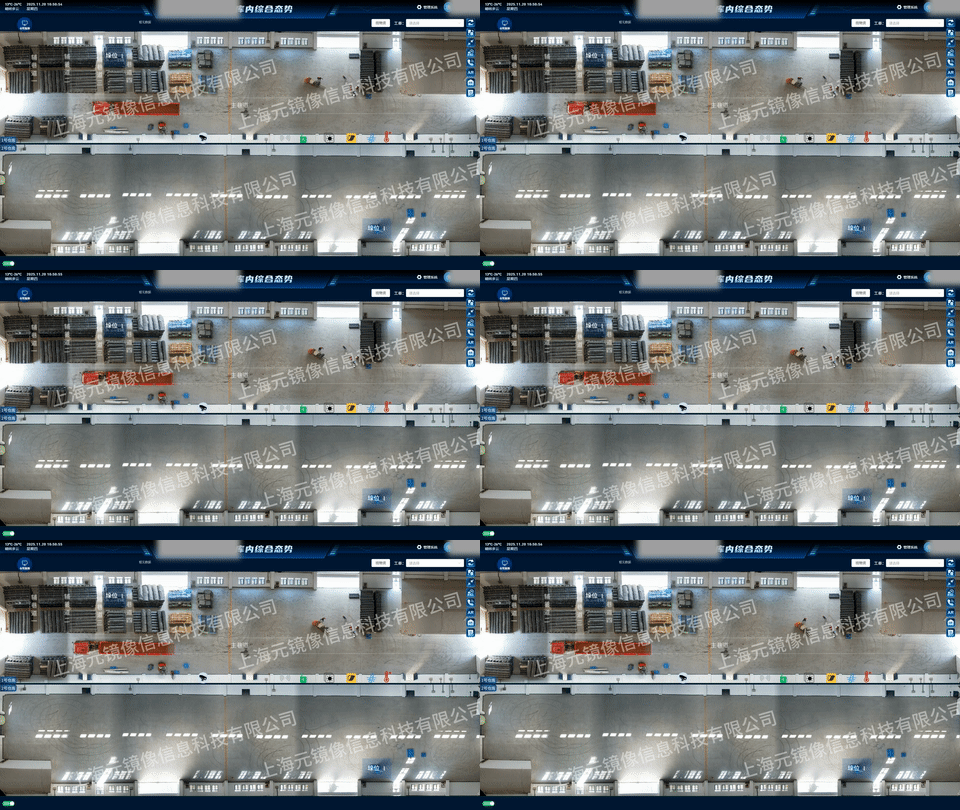
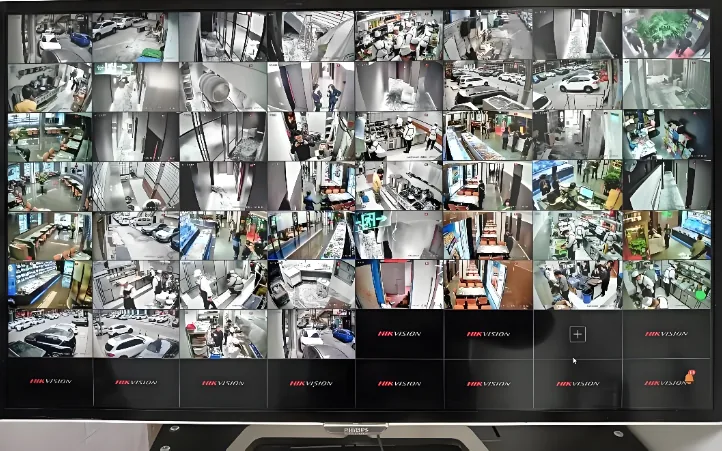
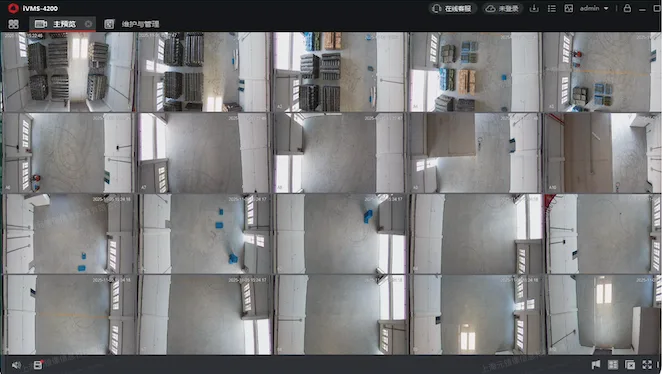
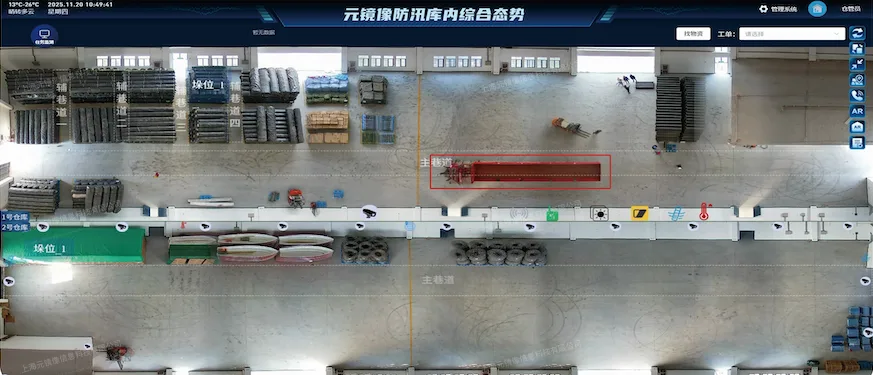
A large emergency-relief warehouse had 20 cameras spread across rack zones, receiving docks, and aisles. Operators constantly switched between 20 split-screen windows. After deploying panoramic video stitching, all 20 feeds merged into one continuous panoramic view with AR rack labels and IoT sensor data. Anomaly localization time dropped from minutes to seconds.
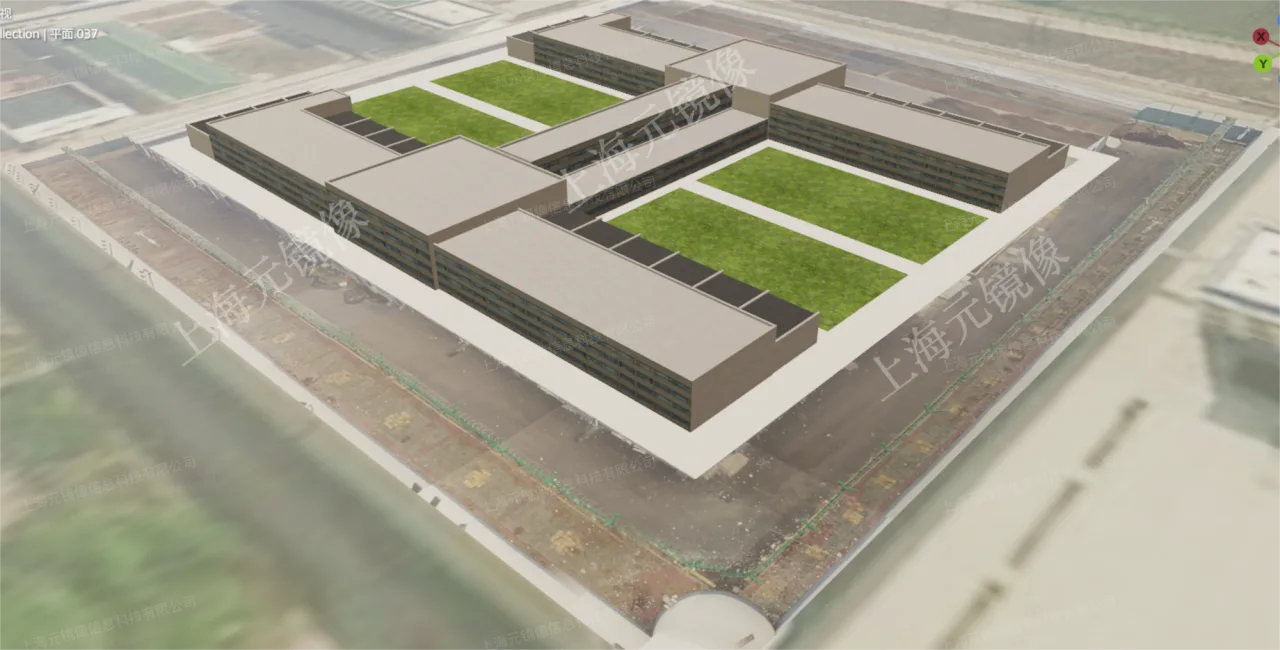
Prison Perimeter Monitoring
Prison perimeter walls are long and static in angle — a classic use case for multi-camera video stitching. A single continuous panoramic view covers the entire perimeter. Wall-scaling attempts become immediately visible, eliminating blind spots and reducing guard fatigue.
Smart Factory Production Line
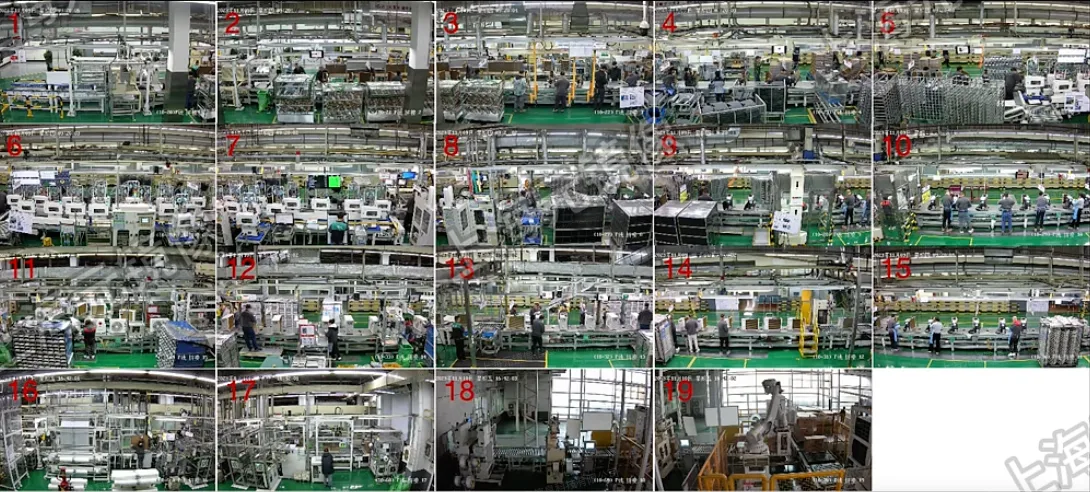
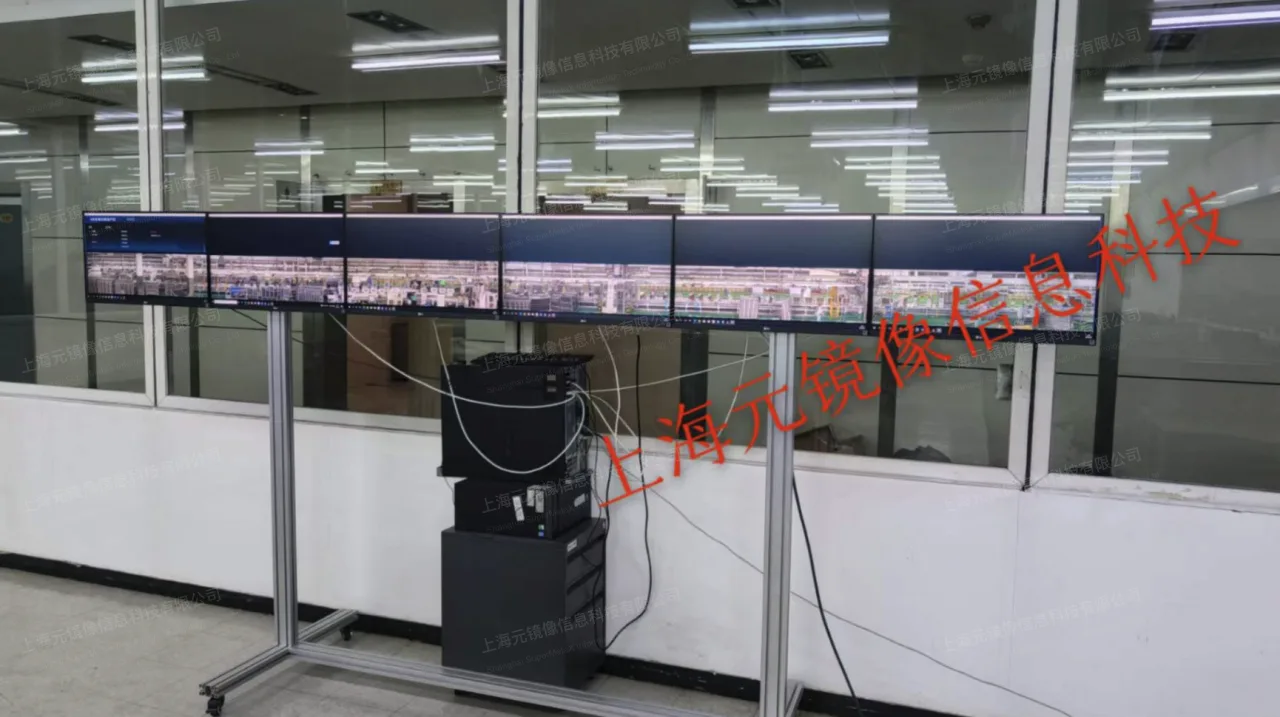
Production lines span tens of meters with cameras deployed in segments. Video stitching software merges all segments so quality inspectors and AI algorithms analyze the full line in a single frame, improving defect detection speed and accuracy.
Port Terminal & Yard
Port yards are large and traversed by heavy equipment. 360 video stitching consolidates yard cameras into a single continuous view. Combined with AI container number recognition and equipment tracking, it supports real-time yard management decisions.


6. FAQ
Does video stitching require replacing existing cameras?
Usually not. Most video stitching software connects via ONVIF/RTSP and is compatible with major brands including Hikvision, Dahua, and Uniview. As long as cameras output a standard video stream, no hardware replacement is needed.
How much overlap do cameras need for panoramic video stitching?
Adjacent cameras typically need 15–30% field-of-view overlap for registration and blending. Too little causes black edges or misalignment at seams; too much wastes effective coverage.
What hardware does real-time video stitching require?
It depends on channel count and resolution. 4-channel 1080p real-time video stitching typically needs an entry-level GPU (e.g., NVIDIA T4). 16-channel 4K requires a workstation or multi-GPU cluster. SuperMetaX provides solutions ranging from edge boxes to rack servers to match your site constraints.
Can a video stitching system integrate with existing NVR/VMS?
Yes. Most video stitching systems output via RTSP or GB/T 28181, so existing NVR, VMS, and display systems connect directly without infrastructure changes.
Summary
Video stitching technology is moving from niche customization to industry standard. As GPU costs fall and algorithms mature, real-time video stitching is being deployed at scale across warehouses, ports, prisons, production lines, and vessels. Choosing the right video stitching system means matching channel count, latency, integration, and scalability to your actual site requirements.