Key Takeaways
- Underground tunnels and workfaces suffer from scattered feeds and blind spots.
- Stitching turns tunnel cameras into one continuous view for safety supervision.
- Existing cameras are reused; equipment selection follows mine safety norms.
1. The Underground Monitoring Problem
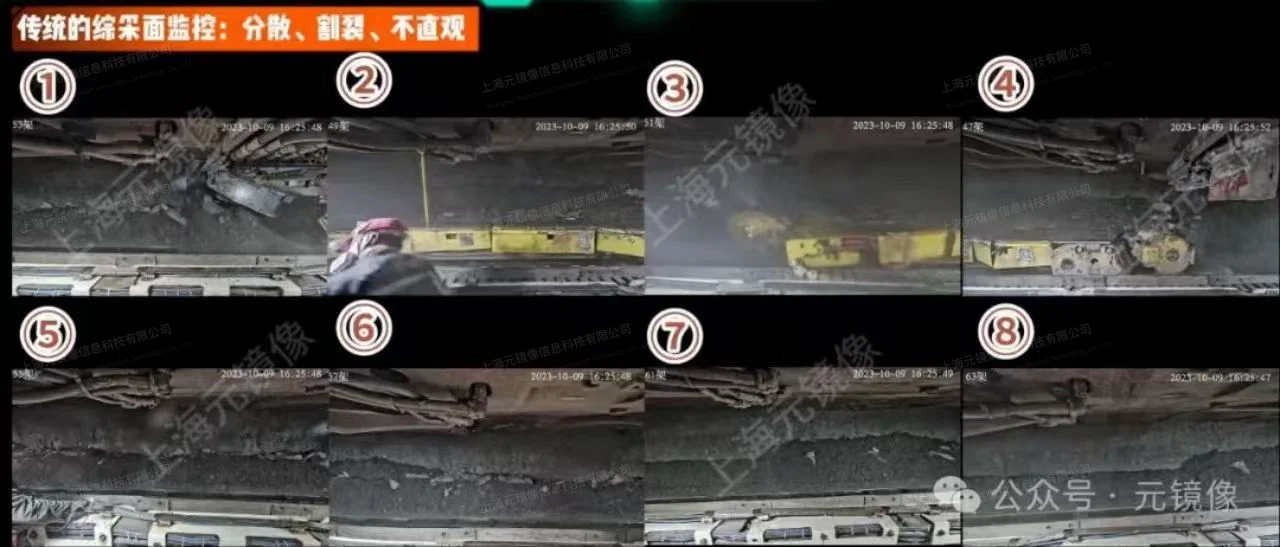
Underground tunnels and workfaces are long, narrow and poorly lit, covered by cameras whose feeds are scattered across screens. Operators lose the spatial relationship between feeds — an incident in one section is hard to locate quickly, and split-screen layouts leave gaps between cameras.
2. The Solution: One Continuous View
Panoramic video stitching merges the tunnel and workface cameras into a single continuous view. The whole section is seen as one spatial picture, so operators locate events at a glance instead of switching screens.

3. Placement and Deployment Notes
- Tunnels / roadways — cameras along the tunnel are stitched into a long corridor panorama.
- Workfaces — multiple angles merge into one overview of the working area.
- Equipment selection — underground deployment follows mine safety norms for the environment; confirm the model with the mine before deployment.
4. Performance Numbers
| Metric | Value |
|---|---|
| Max channels (single server) | 156 |
| End-to-end latency | Within 200 ms |
| Output resolution | Up to 8K |
| Camera reuse | RTSP / ONVIF / GB28181 |
5. FAQ
井下现有摄像头能复用吗?
能。任何提供 RTSP、ONVIF、GB28181 标准视频流的相机都能接入拼接流程,井下既有前端投入原样保留。
井下光线暗、环境特殊,拼接效果受影响吗?
拼接不改变单点成像质量,但多路组合能弥补单点视角局限;井下按现场条件选配低照度或红外机型,上线前建议做井下实测。
能对接矿山安全监管平台吗?
拼接后的全景画面按标准协议输出,可接入既有监管与告警平台协同处置。