- Intersection stitching turns separate cameras into one continuous road view.
- Cross-camera tracking works without screen switching.
1. The Intersection Monitoring Problem
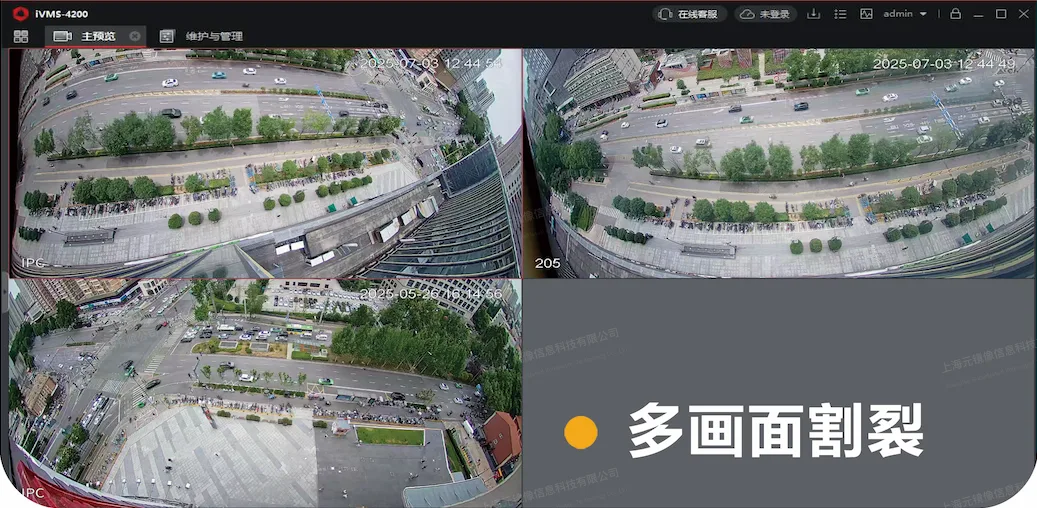
An intersection or road segment is covered by several cameras pointing in different directions, but each feed is its own screen. Operators lose the spatial relationship between feeds — a vehicle exiting one camera's view and entering another becomes hard to follow, which is exactly what cross-camera tracking requires.
2. The Solution: One Continuous Road View
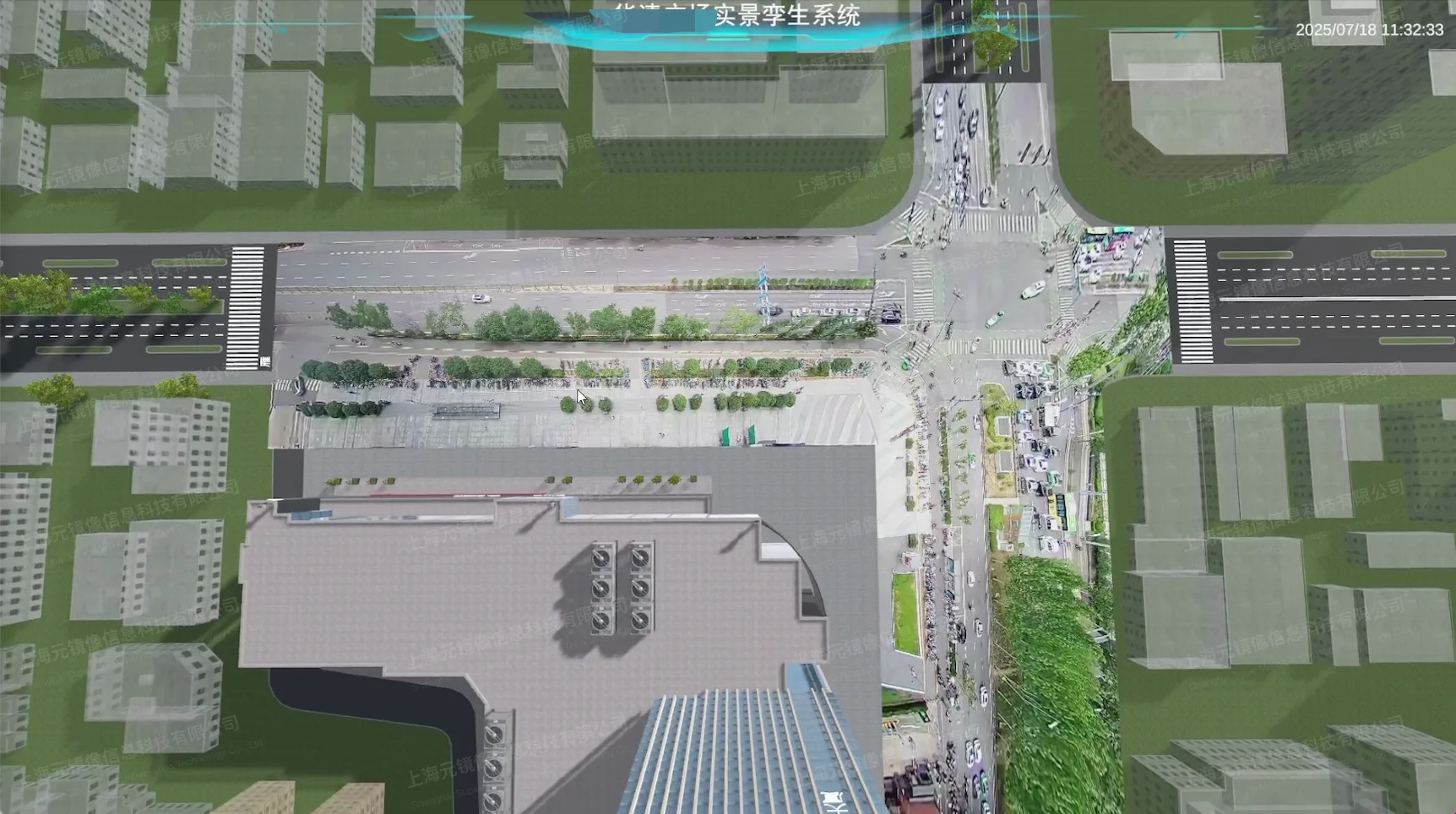
Panoramic video stitching merges the intersection and segment cameras into a single continuous view. The road is seen as one spatial picture, so a vehicle passing from one camera to the next is followed without switching screens. This directly improves cross-camera target tracking and segment-level situational awareness.
3. What It Delivers
- Segment panoramic monitoring — one continuous view of an intersection or road segment.
- Cross-camera tracking — targets are followed across camera boundaries without manual switching.
- Retrofit-friendly — existing cameras are reused; only a stitching server is added.
4. Performance Numbers
| Metric | Value |
|---|---|
| Max channels (single server) | 156 |
| End-to-end latency | Within 200 ms |
| Output resolution | Up to 8K |
| Protocols | GB28181 / ONVIF / RTSP / RTMP / NDI |
5. Frequently Asked Questions
Can existing road cameras be reused?
Yes. Any camera exposing GB28181, ONVIF or RTSP joins the pipeline, so the existing traffic surveillance investment stays intact.
Does stitching help cross-camera tracking?
Yes. Because the road becomes one continuous view, a target moving between cameras is followed without screen switching.
What is the latency?
End-to-end latency is within 200 ms, meeting real-time traffic monitoring requirements.
Does it support GB28181 for traffic cameras?
Yes. GB28181, ONVIF and RTSP are supported, matching the protocols used by most traffic cameras.
Can it link to signal or event systems?
Yes. The panoramic view can connect to signal controllers and event alerts for a coordinated response.