Key Takeaways
- Shelf occlusion and split-screen fragmentation are the two core warehouse pains.
- Stitching turns many cameras into one continuous panorama, eliminating blind spots.
- Existing cameras are reused — only a stitching server is added.
1. The Warehouse Monitoring Problem
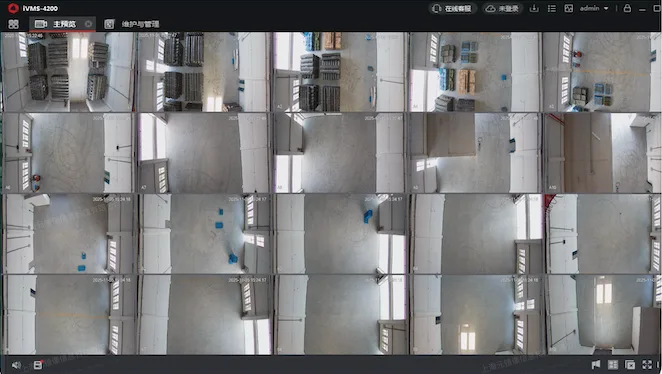
Warehouses are covered by many cameras, but each feed is its own screen. Operators lose the spatial relationship between feeds — a person or forklift moving from one aisle to the next is hard to follow. Tall shelves also block lines of sight, creating blind spots that split-screen layouts cannot resolve.
2. The Solution: One Continuous Panorama
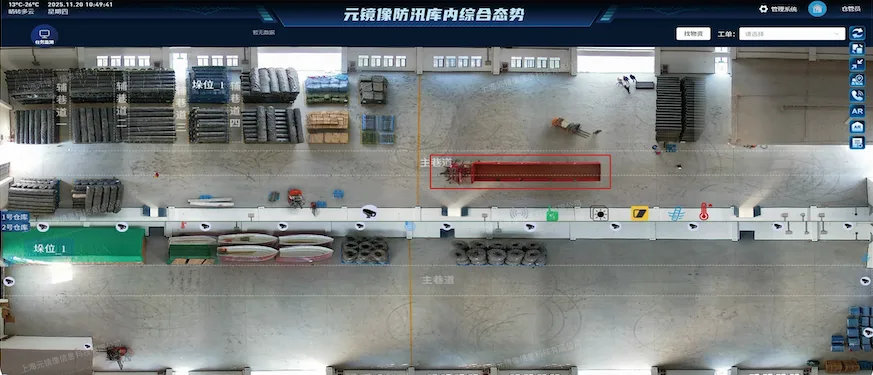
Panoramic video stitching merges the shelf, aisle and entrance cameras into a single continuous view. The whole warehouse is seen as one spatial picture, so a forklift passing from one aisle to the next is followed without switching screens.
3. Camera Placement and Stitching Mode
- Shelves / aisles — cameras along the aisle are stitched into a long corridor panorama.
- Entrances / docks — door and yard cameras merge into one overview.
- Key zones — high-value areas get a dedicated panorama with drill-down to single channels.
4. Performance Numbers
| Metric | Value |
|---|---|
| Max channels (single server) | 156 |
| End-to-end latency | Within 200 ms |
| Output resolution | Up to 8K |
| Camera reuse | RTSP / ONVIF / GB28181 |
5. FAQ
现有仓库摄像头能复用吗?
能。任何提供 RTSP、ONVIF、GB28181 的相机都能接入拼接流程,已有前端投入原样保留。
货架遮挡造成的盲区能消除吗?
拼接本身不改变单点成像,但通过多路画面按空间关系组合,能覆盖单点视角看不到的区域,配合合理布点可显著减少盲区。
拼接后还能单看某一路吗?
能。全景用于全局监控,单路画面可随时放大查看,两者共用同一套取流。